Showing posts with label Germany. Show all posts

Tuesday, December 29, 2015

Munich Part Two

During my second day in Munich, I got to climb to the top of St. Peter's Church, the oldest church in the city. It stands on the hill where Munich’s original monks are believed to have settled back in the ninth century. St. Peter’s is part of the soul of the city; there’s even a popular song about it that goes, ‘Munich is not Munich without St. Peter’s.’

The climb to the top was a little longer than the Heiliggeistkirche in Heidelberg with 305 steps (read all about my trip to Heidelberg here: http://wickedblogger20.blogspot.com/2015/09/heidelberg.html). I climbed it with my friend Jesse and I don't know how he survived it. He is an avid photographer so his backpack is always stocked with a tripod, lights, and various lens. 

Though there was two way traffic on the stairs, there was more breathing room on the St. Peter's stairs then on the Heiliggeistkirche staircase, and an equally dynamic vista.  I got to see the New Town Hall’s famous glockenspiel. Every day at 11am and 12pm (and at 5 o’clock May-Oct), the tower chimes and colorful figures come out of the balcony and dance. The spiel of the glockenspiel tells the story of a noble wedding that actually took place on the market square in 1568. 


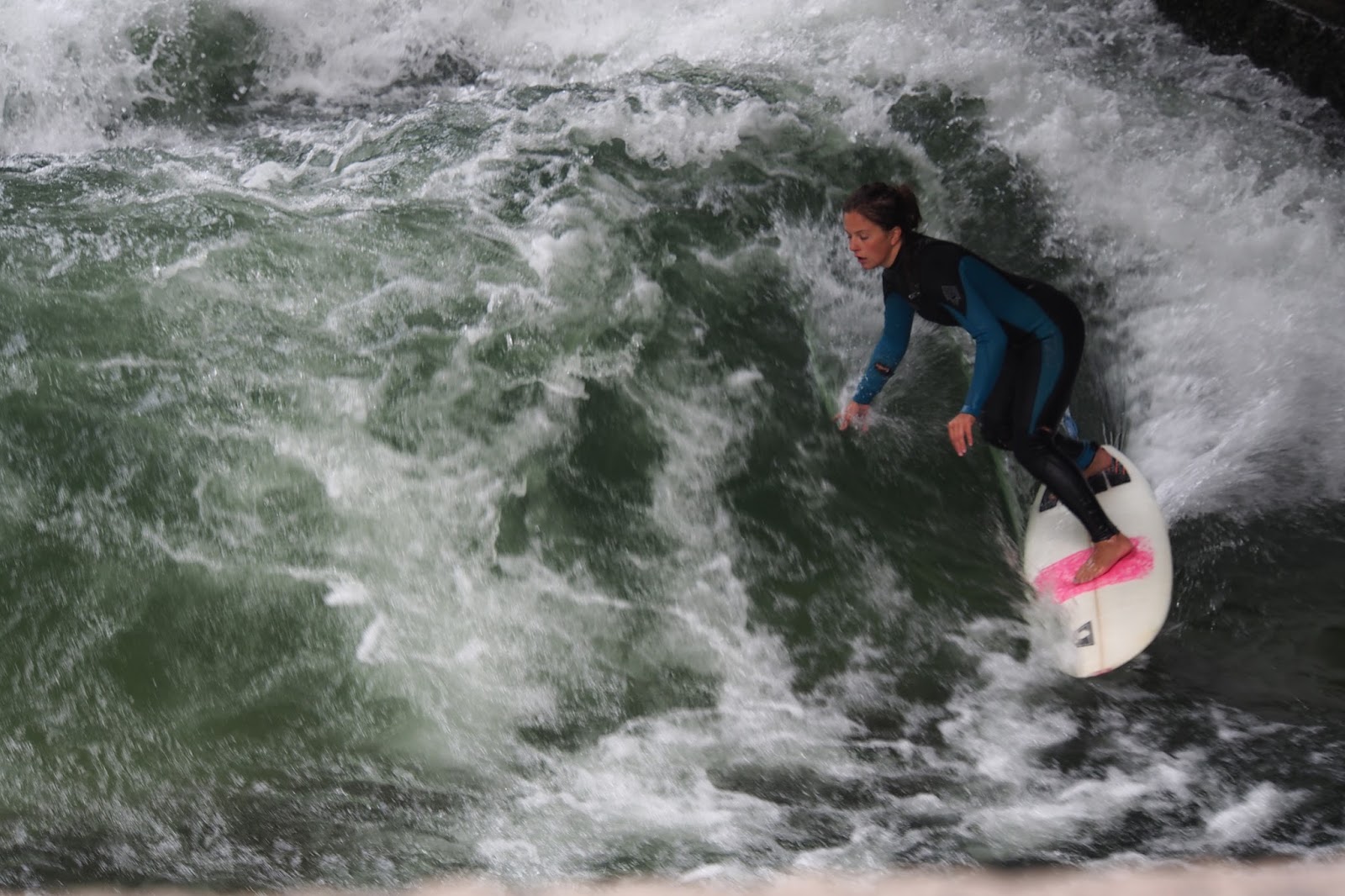
At night, I went swimming in Munich's Isar River. The most recognized strip of the Isar River is the Eisbach, which flows into the English Garten. Just like the Garten, the Isar River is a popular place for having a picnic, rafting, and drinking a beer.

It was a significant moment swimming in it during the wee hours of July 14th, as it was the first time I ever hung out with my boyfriend, Michael. It was his idea, Mr. Spontaneous. During my first class on the History and Geography of Germany, which was three days before the departure, one of the professors and I were taking about how we both need to work on being more spontaneous. I feel since meeting Michael, I am not so nervous when it comes to confronting the unexpected. Though I was unsure then if it was legal or not to swim in the river, I took the dive anyways. We had to walk over some sharp rocks to get to the mainland after our swim, but once he put his arm around me, I never felt more stable on ground. Little did I know then, but Michael was laying down the solid foundation that would pave the road for the strong, healthy  relationship we have now. 

Munich is the capital of Bavaria and it's beautiful, romantic, and has one of the most fascinating stories in all of Europe. It is no wonder it has been voted multiple times as the most livable city in the world. 

*~*~*~*~*~*~*
St. Peter's Church 
Rindermarkt 1, 80331 München, Germany
49 89 210237760 

Dachau Concentration Camp 
Alte Römerstraße 75, 85221 Dachau, Germany
49 8131 669970 

My Social Media 
Instagram: https://www.instagram.com/wickedblogger20/
Twitter: https://twitter.com/danca_l

Saturday, December 26, 2015

Munich- Part One

Before we drove to Munich from Heidelberg on July 12th, my travel group had an hour long pitstop in Augsburg. I ate at a traditional German restaurant and my waiter was a true country boy. I noted in Augsburg that the Germans from the south regions posses the same hospitality and charm that US southerners have. Though my waiter told me that he didn't drink, he declared Munich as the most beautiful city in the world. His high regards of the Bavarian city were not overhype;  of all the cities I visited in Germany, Munich was the one I wish I spent more time in. 

The first place I went in Munich was their newest museum- the Nazi Documentation Center. I had been excited to go there as I was curious to see how the Nazi Party would be represented.  


The Nazi  Documentation Center is located in the former site of the Nazi Party headquarters. It opened on April 30, the 70th anniversary of the liberation by the US troops and Hitler's suicide. The museum had four floors of rich content that covered the rise and fall of Nazism with a focus on Munich’s role. Inside, I noticed that the Germans that were there were reading the panels intensely. It was nice seeing them show such interest in their country’s history as Primo Levi- a chemist, writer, and survivor of the Holocaust- once said: “it happened, therefore it can happen again.” 

After the Documentation Center, I went to my hotel to freshen up and then walked around the English Garten. The English Garten is the largest park city on the European continent. Everyday you can find this place packed with locals and tourists, as well as surfers and nude sunbathers. The English Garten is four times the size of New York City’s Central Park. I stayed in there till midnight and never felt unsafe.  It was Sunday that day, and across the Atlantic Sundays are a day devoted to taking it easy and spending time with loved ones. Walking through the Garten, I saw a group of friends having a picnic with candles, blankets and wine; crowds salsa dancing in a gazebo;  middle aged couples playing bocce under fairy lights; and people in their finest clothes attending an outdoor Mozart and Bach tribute concert. 
Munich is a dream city for bikers. The strip of pathway closest to the street on a sidewalk is reserved for bikes. Bikers ring their cherry bells to warn pedestrians when they are in the way. If you don’t get out of the way, you can expect to be hit and receive no apologizes. No, this didn't happen to me, but it did happen to a drunk British tourist who wounded up with a gash on the top of his head. It was quite a sight before I went to bed! 

To add to my fist night in Munich, it was also Gay Pride Day! In the Marienplatz, the central square in Munich, there was an ABBA cover band performing and rainbow flags waving. Although same-sex marriage is not legal in Germany, seven decades ago it was a terrifying time to be gay in Munich. It is unclear how many of the 5,000 to 15,000 of homosexuals enslaved in concentrations camps perished, but scholar Rudiger Lautmann believes that the death rate of homosexuals in concentration camps may have been as high as 60%! Having visited the Documentation Center hours earlier, it was  beautiful seeing Germans not only own up to their past, but be fully embracive of a group that was severely ostracized by members of their country not too long ago. As 2015 comes to a close, I know I will look back on it as the gayest year. Having experienced less than a month before the trip America legalizing same-sex marriage, I could only hope that the rest of Germany would one day be able to celebrate those rights. 


*~*~*~*~*~*~*~*~
My Social Media
Instagram:https://www.instagram.com/wickedblogger20/ 
Twitter: https://twitter.com/danca_l

Friday, September 18, 2015

The Hofbrauhaus


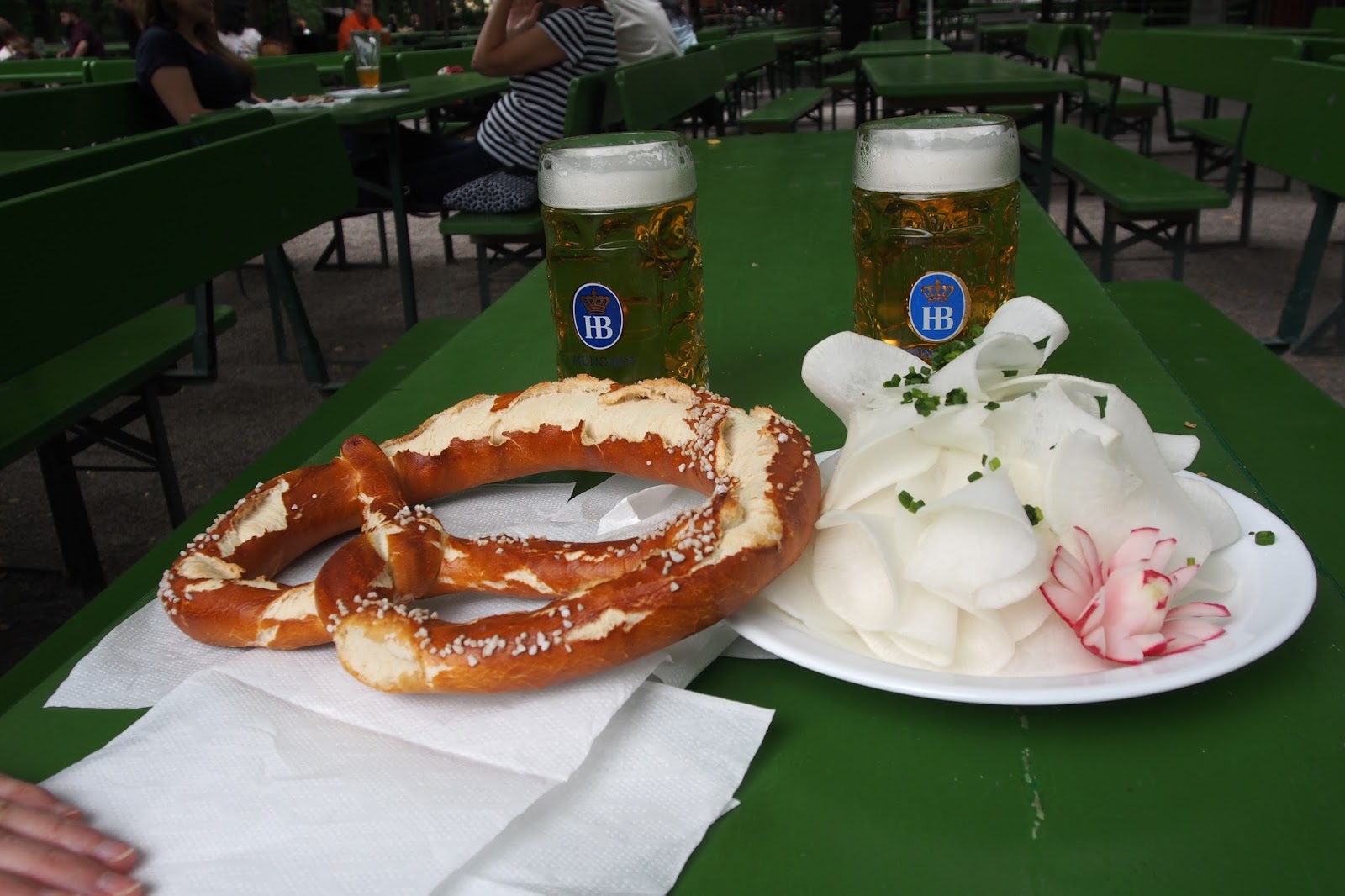
When most people think of Munich, the first thing that pops into their mind is undoubtedly beer. In the capital of Bavaria, this beverage is more than just as a drink- it’s a way of life! Every September, the city hosts a sixteen day festival called Oktoberfest, where a whopping seven million liters are served. But if you want to celebrate beer year round in Munich, then you have to go to the Hofbräuhaus, the world’s most famous beer hall.
The Hofbräuhaus was founded in 1589 by the Duke of Bavaria, Wilhelm V, when he and the city council were not happy with the local beer. ‘Hobrau' means royal beer and ‘haus’ translates to house, but in 1828 King Ludwig opened the Hofbräuhaus to the public. This beer hall’s history is just as rich as its beer.  The Hofbräuhaus saved Munich during the Thirty Years War when the Swedes occupied it in 1632 and they agreed to not destroy the city in exchange for 1,000 buckets of beer; Mozart claimed to have written his opera ‘Idomeneo’ here;  it was the headquarters of the communist government of Munich in 1919;  the first meeting place of Adolf Hitler and the National Socialists in 1920; and Vladimir Lenin frequented the hall in the years leading up to World War II. Sadly, the Hofbräuhaus was almost entirely demolished by the Allied bombs in April of 1944 and only a small section of the original remains. The Hofbräuhaus was rebuilt to its original style and reopened in 1958 in honor of Munich’s eight hundredth birthday. 

Stepping through the doors, I was greeted by the sights of packed wooden tables, giant salty pretzels, steaming food, and jolly people clinking their pitchers. There was live music being performed by an Oom-pah band, some guests were even tipsily singing along, and the waiters and waitresses were wearing traditional lederhosens and dirndls. Many may infer from this that the Hofbräuhaus is a tourist trap, but it’s actually a beloved eatery for the regional people. The name for the regular locals who reserve tables weekly, some even daily, are called Stammgäste. An easy way to spot these people out is by their old fashioned Bavarian garments, which they wear to celebrate their heritage and pride collecting their steins from the Hofbräuhaus' stein vault, which is just left of the entrance. 

The night I went I ordered the Spaetzle egg noddles with Tegernsee-style grated cheese mix and fried onions. When you translate spätzle, it means ‘little sparrow’, but it is essentially is German mac’ n cheese. This meal dates back to the at least the year 1725, but medieval drawings show that it has likely been around for much longer.  The spätzle had a good consistency to it, and I found every bite of it to be silky and smooth, except when I devoured the crunchy, crisp fried onions. Since German meals are heavy with meat, carnivorous dishes the Hofbräuhaus offer up include pig knuckle, bratwurst, and weiner schnitzel. Overall, the food here is real soul food- hearty and generous in portions. 


To accompany my comfort food, I ordered the Hobrau Dark Beer, which my menu described as ‘the origin of Bavarian beer.’ I found this beer to be smooth with a light hop character and rich malty taste. Dunkle is the German word for dark, and dunkle beers typically range in color from amber to dark reddish brown. They have an alcohol content of 4.5% to 6% and are produced using Munich malts which give the dunkle its color.  Other beers the Hofbräuhaus serves include include Radler (a beer with lemonade), Muncher Weisse, and the Hofbrau Original.


The Hofbräuhaus isn’t just a Munich-must, but a place I would recommend everyone put on their own bucket lists. This is a restaurant you can seriously bring anyone to- people watchers, historians, travelers, and of course beer enthusiasts! But putting it’s iconic status aside, the reason I think people should go here before they die is because of its experience. The Hofbräuhaus can seat up to 5,000 people at a time, but sometimes it can get so packed it is not uncommon for strangers to sit together, making it a rather communal experience, something you  don’t just seldom get at a restaurant, but in life. Regardless of what the future holds for the Hofbräuhaus, it is guaranteed to always be a fun time. 


Platzl 9, 80331 
München, Germany
+49 89 290136100


Tuesday, September 1, 2015

Heidelberg

Mark Twain was so besotted with Heidelberg, Germany when he lived there for several months in 1878 that he devoted a chapter in his work, A Tramp Abroad, describing why it is the most ideal city and though I only spent a fifth of my trip there, I would 100% agree with Twain! 

Heidelberg is a city situated on the River Neckar in southwest Germany.It is the longest city in the country and  a popular destination because of its romantic and picturesque landscape.


On our second day in Heidelberg,  my university and I were provided a walking tour of the city by a woman named Sonja, who also went by Mary Poppins because she habitually wears a boater hat and gloves as well as carries a parasol. The first stop was at the Jesuitenkirche, a Catholic church that was built from 1712 to 1751 for the Jesuits who arrived in 1698. 


Both the interior and exterior are quite a sight, but my favorite part was going outside to the silent area, a lush outdoor garden where visitors can go to quietly reflect and meditate. It was the only moment that day I really had to myself and as an introvert I treasured it. 

From there, Sonja took us on a funicular up to Heidelberg Castle. It is this Gothic masterpiece that makes Heidelberg a place out a fairy tale. It was built and repeatedly extended between the 13th and 17th centuries and was extinguished by the Thirty Years’ War and the 1689 war with France. Despite it now being in ruins, it is viewed as one of Germany’s most beautiful gems. 


One of the things I was most excited to see in Germany was Heidelberg Castle and it definitely exceeded my expectations. I was the secretary of my drama club in high school, so it was awesome discovering the Castle has a stage where it regularly puts on productions. My only wish during the trip was that we arrived a few days earlier so I could have seen their recent production of Romeo & Juliet. Another part of the Castle I enjoyed was the Heidelberg Tun, the world’s largest wine barrel. Back when it was constructed in 1751, it held 221, 726 liters. Today, due to the drying of the wood, it can only hold 219,000 liters. 
After Sonja's tour, I toured the University of Heidelberg’s student prison. Founded in 1386, this university is the oldest university in Germany and is basically the nation’s Harvard. From 1778 to 1914, the University of Heideilberg could imprison their students from 24 hours to 4 weeks for any rule breaking. The students were still allowed to attend lectures, so the prison was more like a restrictive dormitory, and those in residence would occupy their time grafting the walls to immortalize their stay. It was not uncommon for a student to create mischief just to be sent there so they could be with their friends. I thought touring the University Prison was a unique experience because prior to it I had never heard of a university prisoning its students.  Overall, I was impressed with the way the University had preserved the prison. With the pristine graffiti and the smell of urine lingering in the air, you would have had no idea that the prison has been out of service for a hundred years. 


Following a midday lunch break of sausages and beer, I climbed to the top of Heiliggeistkirche, the most famous church in Heidelberg. It stands in the middle of the market place in the old center of Heidelberg and is the city’s oldest sanctuary. It’s steeple dominates the city, and climbing all 208 steps to the top was terrifying. There is only one staircase that takes you up and down and it just so happens to be a narrow spiral one. I found myself clinging to the wall to ensure I wouldn't fall to my death, but once at the top, as just like everything I had been seeing in Germany, it was to die for! 

From the Heiliggeistkirche, I did some more intense climbing at Philosopher’s Walk. Built in 1817 on the slopes of Heiligenberg and at an altitude of 650 feet, the Philosopher’s Walk offers a magnificent view of the city. My professor told us the reason for its’ name is you’re suppose to have either philosophical thoughts or discussions during the climb and when I ascended with him and two other student we did indeed have some stimulating talks about death and identity. 

Now that is a vista you could talk about for a long time if you can find words to describe it!

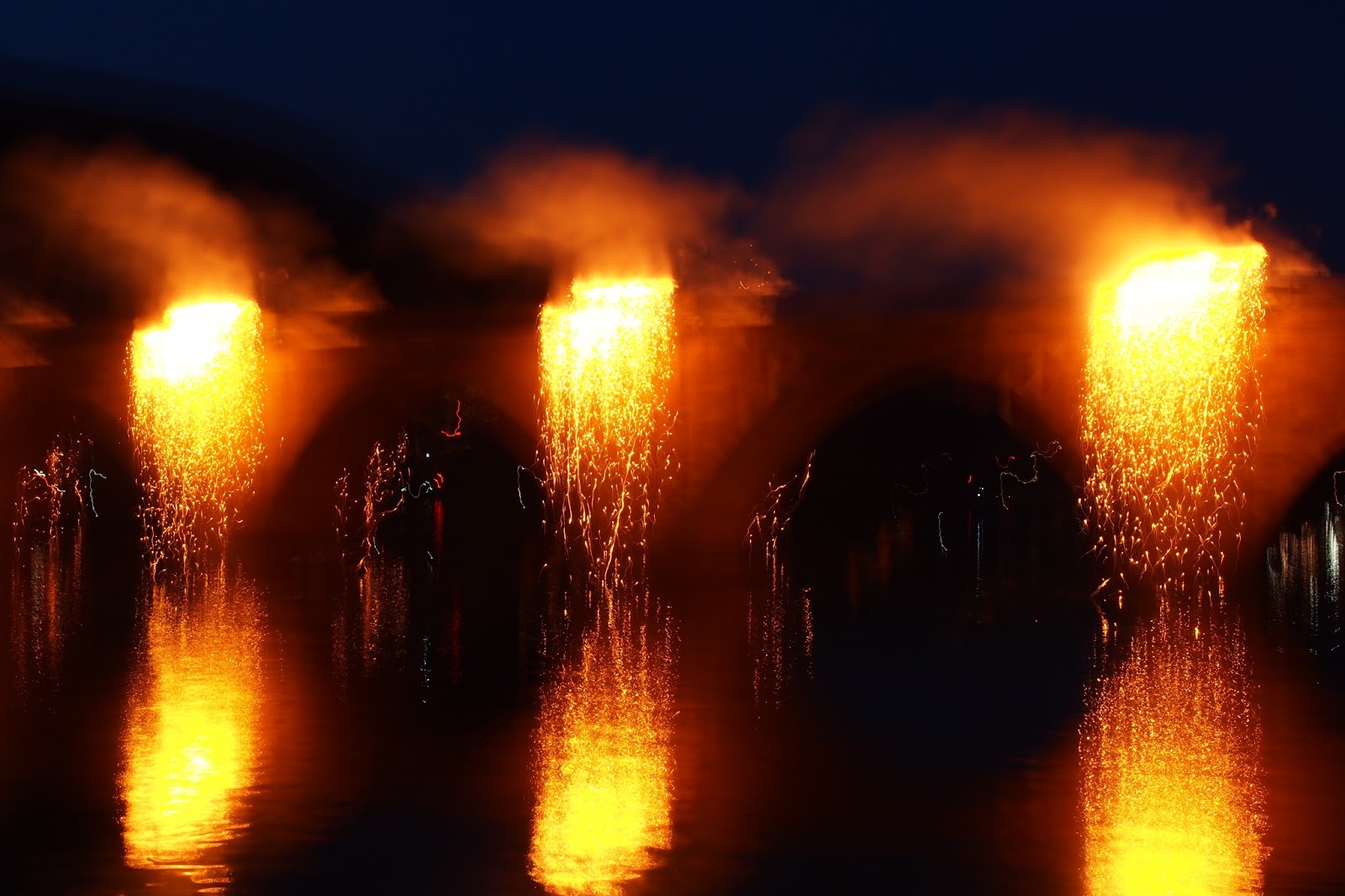
My stay in Heidelberg went out with bang.There are three times every summer when the well-known Schlossbeleuchtung and fireworks display happens and they are the first Saturday in June and September and the second Saturday in July, which was when I was there. 

The castle lighting is done in memory of the three times when the castle went up in flames (1689, 1693, and 1764). The first two times were due to wars with the French, and the last time by lightning. After the flames in the Castle gradually faded, it was time for part two- the fireworks launched off of the Old Bridge.These fireworks symbolized when the Elector-Palatine, Friedrich V, first brought his newlywed bride, Elizabeth Stuart (daughter of James I of England), back to Heidelberg in 1613 and he arranged for her to be greeted with a  fireworks display. It was the best fireworks display I'd ever seen, even surpassing the ones in Disney! 


Stay tuned for my next post on Munich! 

Sunday, August 16, 2015

Worms

The theme of my blog this summer has been that of bucket lists and one of the reasons why I have been on a bit of a hiatus from my little corner of the internet is because back in July I was actually away experiencing one of my top ones. 

Ever since I was nine years old, I have dreamed of studying abroad. It was at this age, my older cousin, Stephanie, spent a semester Down Under. I had never heard of study abroad prior to her departure, and I thought it was the coolest thing in the world that while a person was still in college they could spend some time in another country, absorbing its culture, for credit. I can still vividly  remember gathering around the computer with my family and reading her e-mails detailing her adventures. One picture in particular that stood out is one of her feet just before she jumped out of a plane to sky dive. I wanted nothing more than at that moment but to reach through the screen and take the plunge into the unknown. 

I started research on programs during my freshman year, and the past two years have been a discouraging time trying to find one that wouldn’t cost me one of my kidneys. Just when I thought all hope was lost, my best friend, Angela, went online and found a two week trip to Germany through my university. Last July, she went on a faculty led trip to Italy with her university. Suffice to say, she was determined to not see me miss out on an unforgettable opportunity.

Our first Deutschland destination was Worms. We were here for an hour long pit stop before we made our way to our first stop in Heidelberg and here is an assortment of pictures I took while I was there. Be sure to stay tune for September 1st, which is when my post on Heidelberg will be live.

This Rhineland-Palatinate city's most famous visitor was Martin Luther, who was the leading figure in the Protestant Reformation. He came to Worms in April of 1521 when he was asked to appear before the Imperial Diet. It was here he refused to renounce his views and the Holy Roman Emperor, Charles V, declared him an outlaw. 

This mosaic on the balcony of the Holy Trinity Church, the largest Protestant church in Worms, illustrates the trial for Luther of heresy. 


The other symbol of Worms is  dragons. Everywhere I turned I kept seeing countless dragons in sculptures, fountains, and figurines. Worms in one of Germany’s oldest cities and that there used to be folk talk here about a dragon that was going to smash the city unless he got a townsperson a day as a sacrifice.  Worms is also the setting for the epic poem, “The Nieblungenlied.” In this poem, the hero Siegfried is a dragon-slayer who bathed in the blood of a dragon he’d killed. The dragon on the city coat of arms is believed to be the dragon from ‘The Nieblugenlied.’


This  mural reminded me of the scene from “The Hobbit” when Bilbo runs into Smaug. 


Social Media 
Twitter: https://twitter.com/danca_l
Instagram: https://instagram.com/wickedblogger20